
Traditional Chinese Medicine
You may have heard about traditional Chinese medicine, but do you know how Chinese doctors judge the disease and what treatments will follow after judging? Let's find out together today!
Traditional Chinese Medicine (TCM) created by the Han Chinese is a study of physiology, pathology and diseases prevention and diagnosis.
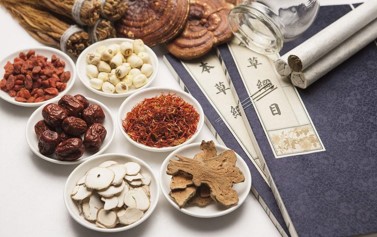
The history of TCM
- TCM came into being in the primitive society.
- Its theory was formed during the Spring and Autumn Period (770 BC-476 BC) and the Warring States Period (475 BC-221 BC).
- TCM made great progress in the Song Dynasty (960 AD-1279 AD), and its theories became increasingly systematic and normalized.
- During the Ming (1368 AD-1644 AD) and Qing (1636AD-1912AD) Dynasties TCM tended to be scientific. At that time medical professionals improved the theory of TCM despite enormous pressure and difficulties.
TCM focuses on yin, yang and five elements (metal金, wood木, water水, fire 火and earth土), and views people as a combination of gi (the vital fluids and the energy itself that flows through human bodies), shape, and spirit.
How doctors judge the disease?
Through four methods of diagnosis, namely observation望, auscultation闻, inquiry 问and pulse
Feeling切, doctors are able to know the nature, location, cause, and mechanism of the disease, and feel the changes in organs, channels and joints.
Through the above systematic examination, whether the disease is positive or negative can be judged and what exactly the disease is can be determined.
What treatments will follow after judging?
Various techniques, including Chinese herbs, acupuncture massage, cupping, and diet therapy can be employed to balance yin and yang inside the patient, who will then get well gradually.


