
The Origin of Qipao
Qipao, a traditional dress for females in China, is reputed as one of the paragons典范 of traditional Chinese costumes and an irreplaceable cultural heritage in the fashion world.
Though debated by experts about the exact time of its occurrence, it is generally believed that Qipao originated from a type of Manchurian female garment in the Qing Dynasty (1636-1912). It evolved and was quickly popularized during the Republican Period 民国时期. Under the influence of fashionable high-class courtesans, celebrities in Shanghai and even politicians of the time, it reached its heyday in the 1930s and 1940s.
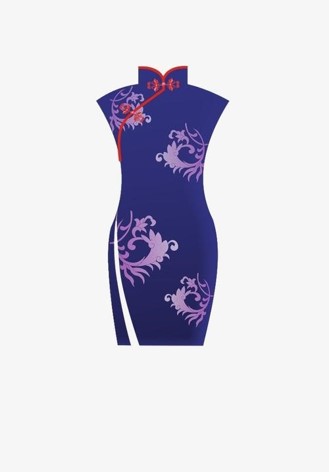
Qipao has gone through constant changes. The original Qipao was loose-fitting and puritanical enough to conceal the figures of the women's body. Modern Qipao is tight-fitting, accentuating the female shape. Two major styles of modern Qipao were established in the progression, namely the Shanghai style and the Beijing style. The former, absorbing western elements of design and tailoring, leads the fashion trend.
It is generally accepted by scholars that the craze for Qipao in the Republican Period is a natural result of the rise of feminism and women's pursuit of intellectual freedom. Women's wear in former Dynasties was a two-piece garment 两截穿衣and one-piece garment一件长袍 was exclusively worn by men. Wearing Qipao, which is basically a one-piece robe, carries a symbolic sense of promoting gender equality. Later on, the priority of Qipao shifted from a political expression to aesthetic美学 and ornamental 装饰emphasis. It was chosen as the Republic of China's mandarin gown in 1929.
Since the reform and opening-up policy was adopted in China, Qipao has been designated as the formal attire for female diplomats in foreign affairs activities and international conferences. It usually enjoys priority of the uniform in service industry and a dress for brides to change into for the tea ceremony at their weddings.


